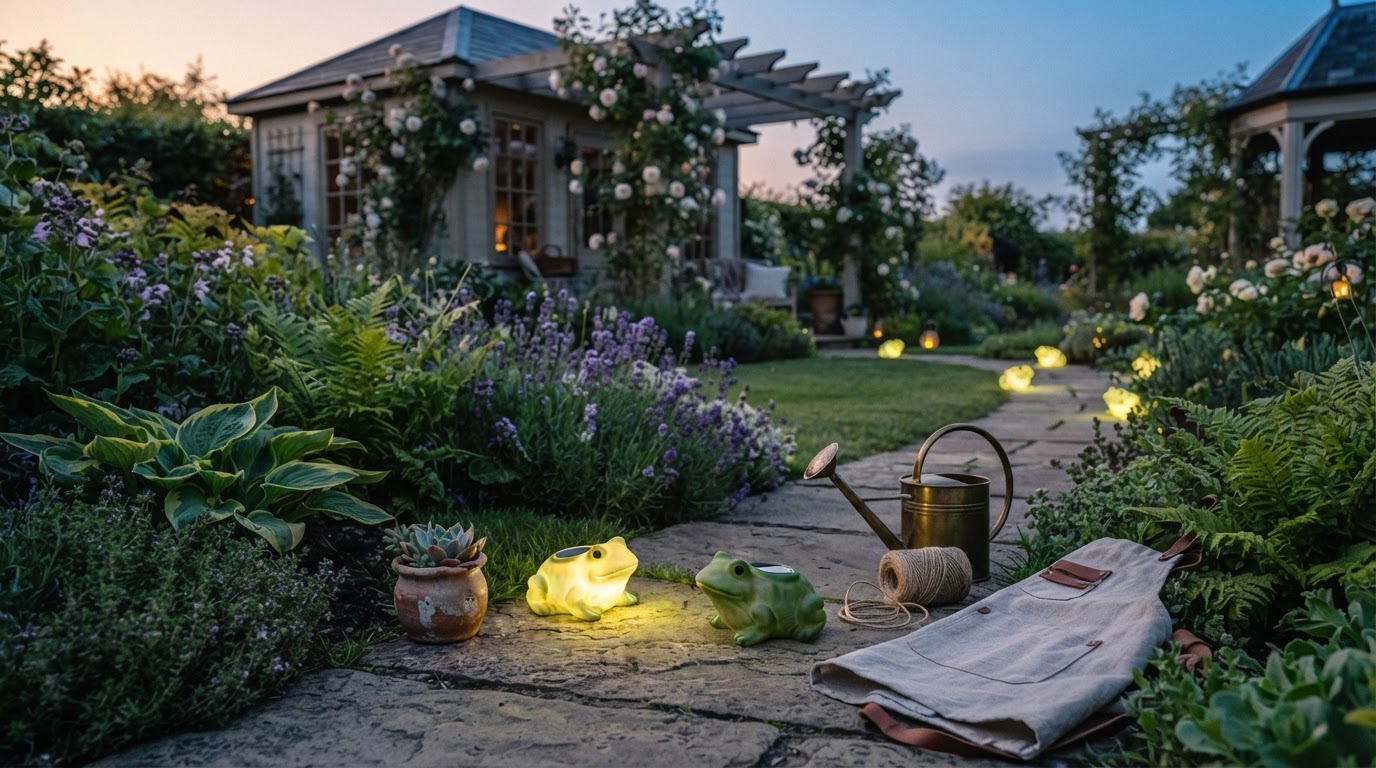
Solar Frog Lights for Sustainable Garden Decor
 Maya ChenContributing Editor
September 16, 2026. This analysis evaluates the integration of photovoltaic technology within decorative garden elements to reduce residential energy consumption. It is written for homeowners seeking to balance whimsical landscape design with measurable utility savings.
The Efficiency Gap in Decorative Lighting
The conventional wisdom says that garden ornaments are purely aesthetic, serving no functional purpose beyond visual clutter. However, this perspective ignores the massive energy drain caused by traditional low-voltage wired lighting systems. According to data from the U.S. Department of Energy, outdoor lighting accounts for a significant portion of residential electricity use, yet much of this is wasted through inefficient incandescent bulbs or poorly timed transformers. Most consumers attempt to solve this by purchasing frog lawn ornaments solar that lack the necessary battery capacity to last through a standard night cycle. Here's the part nobody talks about: the majority of mass-market decor fails because the solar panel surface area is insufficient for the LED draw. When evaluating frog garden decor solar powered options, the primary failure point is not the aesthetic mold, but the conversion efficiency of the polycrystalline silicon cells used in the housing. Many enthusiasts believe that a larger ornament equates to better performance, but without a high-quality internal NiMH or Li-ion battery, the unit is effectively disposable after one season of deep discharge cycles. The industry consensus suggests that decorative lighting is a 'luxury' expense, but I reject the notion that we should accept 4-hour runtimes as the standard for sustainable landscaping. A truly functional garden requires components that operate autonomously without manual intervention or grid reliance.
Technical Integration of Solar Frog Lights
Solar Frog Lights addresses these systemic inefficiencies by prioritizing the ratio between solar intake and lumen output. While standard frog lawn ornaments solar might use generic 20mA panels, these units are designed to maximize the specific placement of the photovoltaic cell on the uppermost curve of the frog's anatomy to capture peak solar noon radiation. The integration of dusk-to-dawn sensors removes the human error factor, ensuring that energy is only expended when ambient light levels drop below 10 lux. This is not merely about placing a light inside a statue; it is about engineering a weather-resistant housing that protects the circuitry from the corrosive effects of soil moisture and UV degradation. Run the math: a wired 10-watt garden light running 8 hours a night consumes roughly 29 kWh per year. By transitioning to a fleet of Solar Frog Lights, a homeowner eliminates that specific draw entirely while maintaining the same navigational safety in their walkways. Furthermore, the use of warm-spectrum LEDs (typically 2700K to 3000K) ensures that the lighting does not contribute significantly to blue-light pollution, which has been shown to disrupt local nocturnal ecosystems. By focusing on the durability of the resin housing, these lights avoid the 'brittle-plastic' syndrome that plagues cheaper alternatives found in big-box retail centers. The goal is a product that survives five years of thermal expansion and contraction cycles, not just one summer.
Selecting High-Performance Garden Ornaments
Choosing the right frog garden decor solar powered unit requires looking past the paint job and inspecting the internal specifications. Most buyers make the mistake of prioritizing the 'cuteness' factor over the IP (Ingress Protection) rating. If a unit does not explicitly state an IP44 rating or higher, it will likely fail during the first heavy rainstorm due to capillary action drawing moisture into the battery compartment. I'll change my mind when I see a wired system that can match the zero-marginal-cost operation and ease of installation provided by these standalone units. When curating a landscape, the placement of frog lawn ornaments solar should be dictated by the solar path, not just the visual focal point of the flower bed. A high-performance unit in a shaded corner is a wasted asset. To ensure your investment yields the expected operational lifespan, use the following technical checklist:
- Verify the battery chemistry is replaceable (look for standard AA or AAA NiMH sizes).
- Confirm the presence of a silicone seal around the solar panel edge.
- Test the light sensor by covering the panel in daylight to check for immediate activation.
- Select units with a minimum of 6-8 hours of rated discharge time.
- Ensure the base is weighted or includes a ground stake to prevent wind displacement.