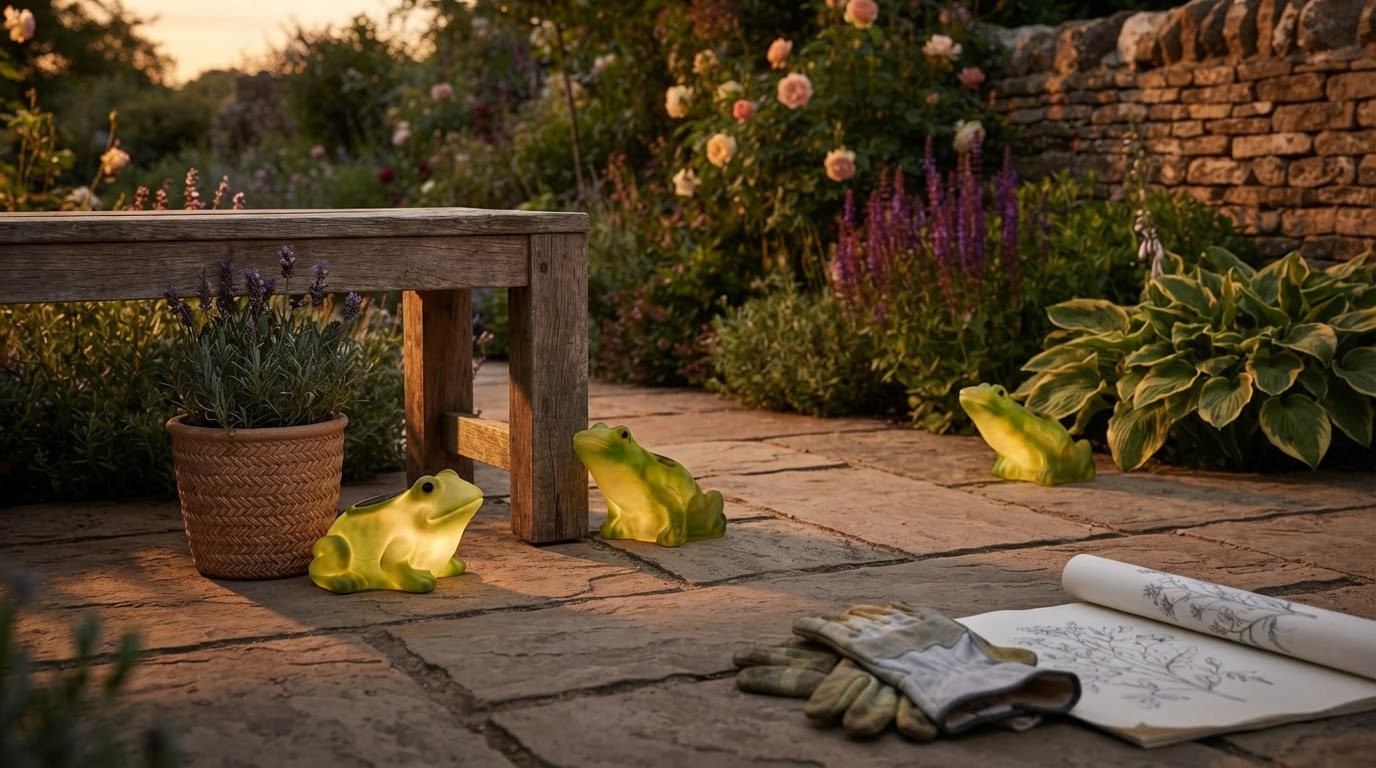
Solar Frog Lights: The Three-Point Placement Framework
 Priya RamanSenior Analyst
October 31, 2026 — The rising demand for eco-conscious landscape aesthetics has positioned Solar Frog Lights as a primary choice for homeowners seeking both character and functionality in their outdoor lighting schemes.
Modern garden illumination has transitioned from purely utilitarian floodlights to decorative, low-impact fixtures that mimic natural forms. According to Nature’s Solar Lights, specialized animal-themed fixtures like frog solar lights and integrated water fountains are increasingly utilized to create focal points that serve dual roles as daytime sculptures and nighttime beacons. This evolution reflects a shift toward "biophilic" lighting design, where the hardware complements the organic environment rather than competing with it. To evaluate these fixtures effectively, we apply a structured approach to assessing their utility within a residential ecosystem.
The Three-Point Placement Framework
To maximize the utility of Solar Frog Lights, we evaluate them across three distinct axes: luminous intensity, structural resilience, and spatial integration. Two axes matter here: the charge-to-discharge ratio and the physical displacement of the light source. A solar fixture is only as effective as its ability to convert daylight into usable evening lumens. For Solar Frog Lights, this involves selecting a site that receives a minimum of six to eight hours of direct sunlight to ensure the internal photovoltaic cell can fully charge the Ni-MH battery. When these conditions are met, typical runtime averages between eight to ten hours, covering the high-activity window of most evening garden use.
Think of it as a matrix of visibility versus duration. In terms of resilience, these units are designed with textured surfaces and weather-resistant coatings to handle standard precipitation. While many decorative units are rated for moisture resistance, larger infrastructure projects often require the industrial-grade energy storage found in systems from Green Frog Systems, which highlights the importance of matching the fixture's scale to the environment's demands. For the average consumer, the decision rule is simple: prioritize placement in high-visibility transit zones if the goal is safety, or recessed garden beds if the goal is ambient depth. Once you see it this way, the choice between a standalone statuette and a series of stakes becomes a matter of landscape layering. Integrating glowing frog garden stakes into smaller containers or tight borders allows for vertical interest that larger, stationary figurines cannot provide. Furthermore, understanding how do solar garden frogs handle extreme weather is vital for long-term maintenance, as seasonal shifts impact battery efficiency. By contrasting these units in a frog garden decor solar powered comparison, it becomes clear that the balance of aesthetics and technical specs is the key to a successful installation.
Expert tip: To maintain the efficiency of the photovoltaic panel, wipe the solar collector on the frog's back with a damp cloth every two weeks to prevent dust buildup from reducing the charge rate by up to 20%.
Selecting the right fixture involves weighing decorative charm against the practicalities of outdoor longevity and light output. Shop Solar Frog Lights.
Sources
- Solar Frogs & Turtles
- Green Frog Systems: Solar Street Lighting & Energy Storage
- Solar Light-Up Garden Frog Says Hi! (So Cute!) - YouTube