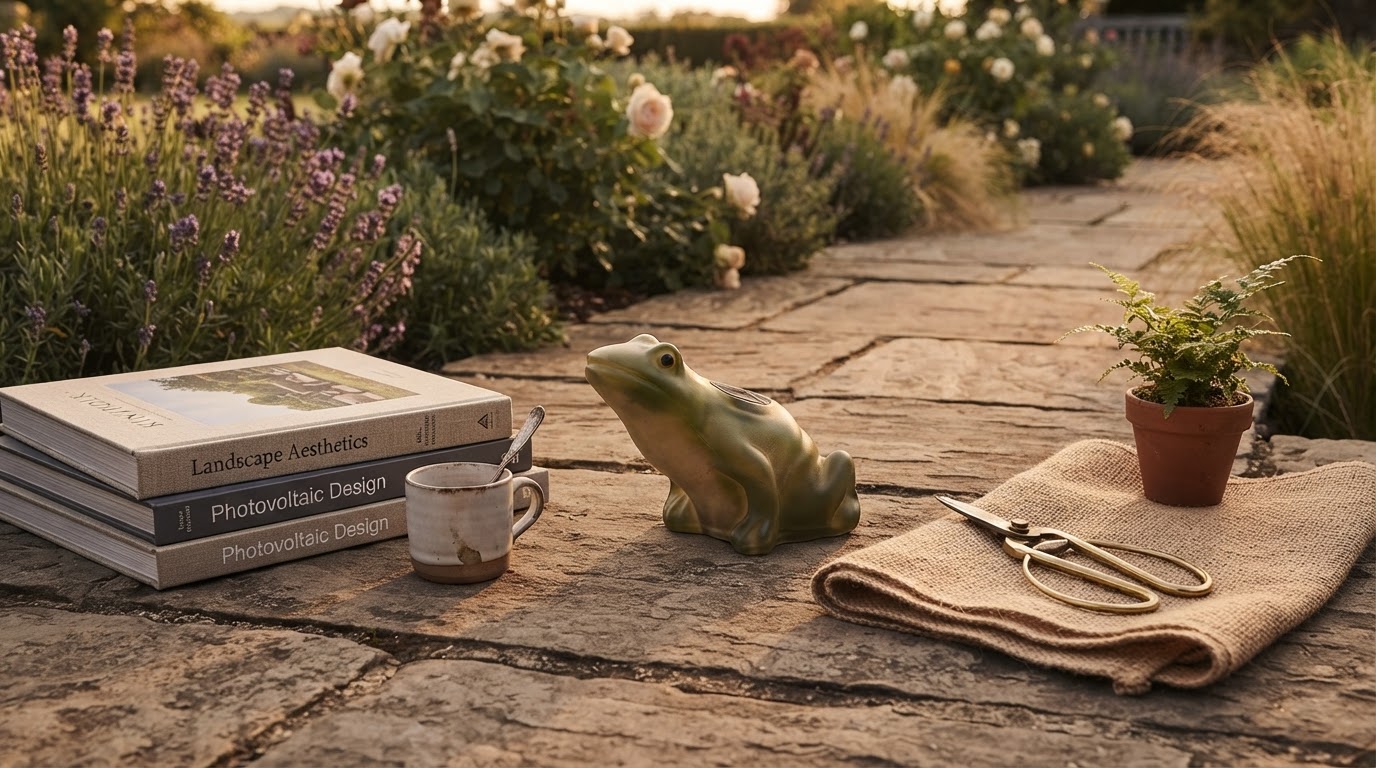
Solar Frog Lights: Validating Garden Statue Performance
 Maya ChenContributing Editor
October 24, 2026. This analysis evaluates the functional durability and light output of solar-powered frog garden statues within modern landscape design. It is intended for homeowners seeking to balance aesthetic garden ornamentation with reliable photovoltaic performance.
The Limitations of Decorative Solar Integration
The conventional wisdom says that garden ornamentation and functional lighting are natural partners, yet the physics of small-scale solar often tells a different story. Most consumers prioritize the visual appeal of a resin figurine, overlooking the specific energy density required to power LEDs through a full night cycle. According to data from a Mini Frog Statue w/ Solar Lights Decoration Review on YouTube, many entry-level miniature statues are designed as accent markers rather than primary light sources. The primary failure point in this category is not the LED itself, but the placement of the photovoltaic panel relative to the statue's physical geometry. When a frog statue is designed with deep crevices or overhanging features like a metal frog solar lantern, the panel often suffers from self-shading, which significantly reduces the battery's state of charge. Furthermore, the market is saturated with low-grade plastics that degrade under UV exposure within a single season. While outdoor frog statues with solar lights outdoor are marketed as set-and-forget solutions, the reality is that their efficiency is strictly governed by the local solar irradiance and the quality of the internal Ni-MH or Li-ion cell. Run the math: a standard 2V solar panel found on these units requires at least six hours of direct, unobstructed sunlight to provide roughly four to six hours of illumination at a modest 5-10 lumen output. Anything less results in a dim, flickering glow that fails to define the garden's perimeter effectively.
Engineering Resilience in Solar Frog Lights
Addressing these mechanical shortcomings requires a shift from viewing these objects as mere toys to treating them as outdoor electrical components. Solar Frog Lights utilizes high-density, weather-resistant resin to mitigate the thermal expansion and contraction that typically leads to water ingress in cheaper alternatives. Here's the part nobody talks about: the waterproofing rating. While many generic statues lack a formal Ingress Protection (IP) rating, professional-grade models are built to withstand heavy rain and irrigation spray without short-circuiting the internal wiring. This is particularly important for solar frog stakes for yard, which are positioned closer to the soil and subject to higher moisture levels. The integration of LED technology has also evolved; rather than a single, high-draw bulb, modern units often distribute light through multiple low-wattage points, such as the five LED configuration noted in listings for the Solar Garden Frog on eBay. This distribution ensures that even as the battery depletes, the statue remains visible as a silhouette. The use of polycrystalline solar panels in these designs offers a compromise between cost and efficiency, performing better than amorphous silicon in slightly overcast conditions. When these statues are placed correctly, they bypass the need for complex trenching or high-voltage wiring, providing a localized light source that is carbon-neutral. However, the efficacy of this system remains entirely dependent on the user's willingness to maintain the panel surface, as a thin layer of dust or pollen can drop energy conversion by as much as 30%.
Technical Criteria for Statue Selection
Selecting a solar-powered statue requires looking past the "cute" factor and auditing the hardware. The consensus suggests that all resin statues are created equal, but the material composition dictates whether the item will crumble or fade. High-quality options, like the outdoor solar frog on Etsy, often feature hand-painted UV-resistant finishes that protect the underlying resin from becoming brittle. When evaluating a new addition to the landscape, consumers should prioritize the following technical benchmarks:
- Panel Placement: Ensure the photovoltaic cell is located on a flat, upward-facing surface of the frog's back or head to maximize sun exposure.
- Battery Accessibility: Check if the battery compartment is sealed with a gasket and uses standard rechargeable sizes (like AA or AAA Ni-MH) for easy replacement when the cycle life ends.
- Material Weight: A heavier resin or stone-composite base prevents the statue from tipping during wind events, which can crack the solar housing.
- Lighting Effect: Determine if the light is static or dynamic; for instance, the Smart Solar Blinkin' Frog Garden Ornament shown on TikTok uses a specific pulsing effect that may or may not suit a minimalist garden aesthetic.
- Switch Protection: The power switch should be covered by a rubber boot to prevent corrosion from morning dew and humidity.