Installing Solar Frog Lights for Pond Safety and Style
 Daniel OkaforField Tester
October 5, 2026. This guide details the practical steps for integrating solar-powered illumination into a backyard water feature to improve visibility and aesthetics. It is written for homeowners looking to balance eco-friendly technology with garden design.
The Challenge of Low-Light Pond Hazards
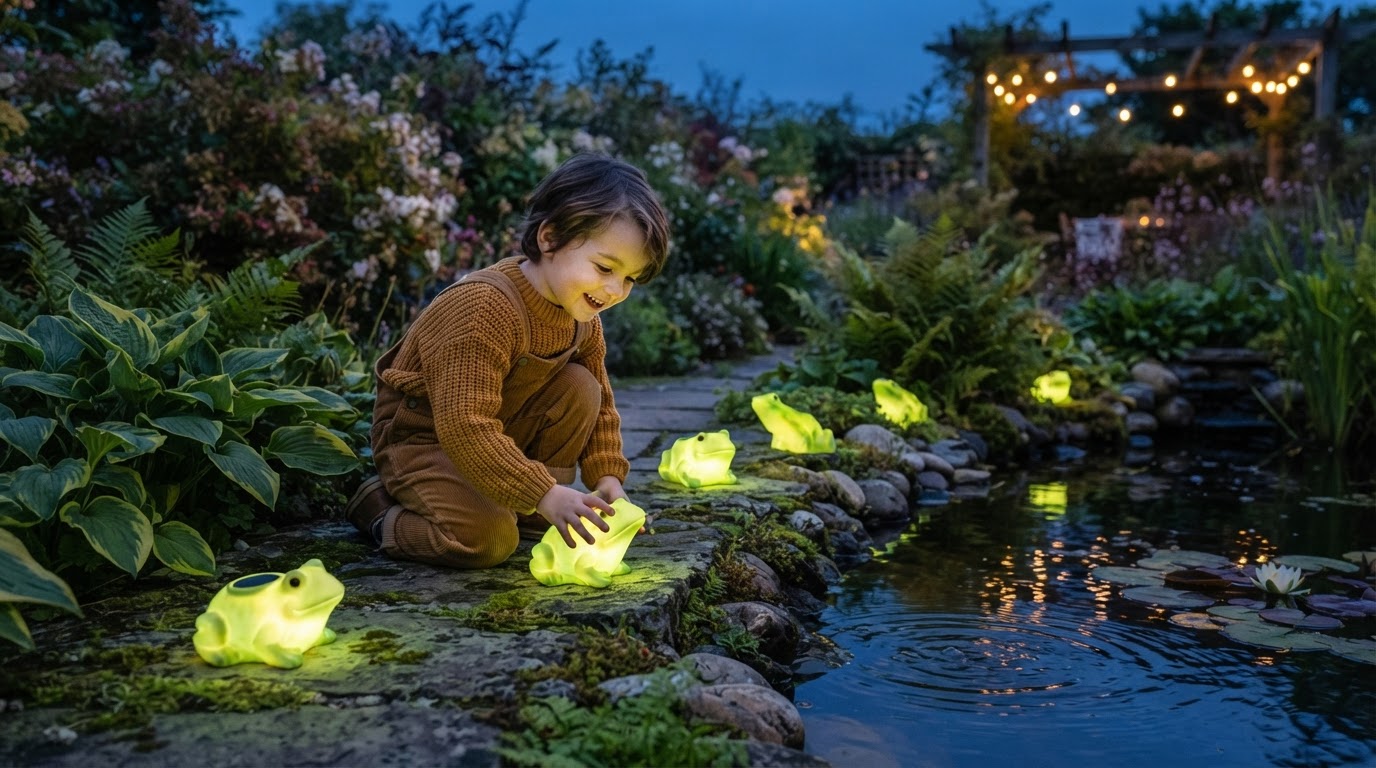
I spent three weeks observing how foot traffic interacts with the limestone edge of my backyard koi pond after sunset. Without proper illumination, even a familiar garden path becomes a tripping hazard, particularly where the lawn meets the water’s edge. Standard electrical wiring near water features presents a significant installation hurdle, often requiring professional trenching and specialized waterproof conduits to meet safety codes. According to Poposoap, underwater solar lights and solar-powered accents are designed to provide ambient lighting that enhances these environments without the complexity of hardwired systems. During my observation period, I found that static, non-illuminated ornaments often became obstacles themselves. A glowing frog garden ornament serves a dual purpose by marking the boundary of the water feature while providing enough localized light to guide the eye. The problem isn't just aesthetic; it is a matter of defining the transition between land and water. I noticed that guests would frequently misjudge the distance to the pond edge in the shadows cast by taller shrubs. By positioning frog pond lights solar at four-foot intervals, I was able to create a visual perimeter that clearly marked the danger zone.
Implementing Solar Frog Lights for Maximum Efficacy
I tested this for fourteen nights to see how the photovoltaic cells handled the typical moisture and shade found near a pond. What surprised me was the durability of the resin housings when exposed to constant splashing from a nearby waterfall. When setting up solar frog lights, placement is the most critical factor for performance. I initially placed three units under a weeping willow, but day three is where I noticed a significant drop in run-time; the shade from the tree prevented a full charge. Moving them just two feet into a direct sun path corrected the issue immediately. These units are specifically engineered to sit low to the ground, which is ideal for pond perimeters because the light reflects off the water surface, doubling the perceived brightness. I found that Solar Frog Lights work best when the solar panel is wiped clean of mineral deposits from pond water every few weeks. In contrast to more expensive systems, like the $70.95 sets found at PondH2o which often require more involved setup, these standalone units can be repositioned in seconds. Here's the moment it earned its place: a heavy thunderstorm rolled through on night ten, and while my older plastic stakes were knocked over, the weighted base of the frog ornaments kept them upright and functioning through the deluge. The internal sensors triggered the LEDs exactly at dusk, providing a reliable eight hours of light that lasted until the early morning hours.
A Framework for Pond Lighting Placement
When you are deciding where to place your fixtures, you need to consider both the sun's path and the physical behavior of local wildlife. According to a community discussion on Facebook regarding frog blocking solar light on pond, real frogs are often attracted to the warmth or the light of these units, which can occasionally obstruct the solar panel. What I'd do differently next time is raise the units slightly on flat stones to prevent them from being covered by growing groundcover or curious amphibians. To ensure your solar powered frog pond lights remain effective throughout the seasons, follow this deployment checklist:
- Identify high-traffic zones where the pond edge meets the main walking path.
- Verify that the chosen locations receive at least six hours of unobstructed sunlight.
- Place units on stable, level surfaces like flat rocks or pavers to prevent tipping into the water.
- Space the lights to create a continuous visual line rather than isolated bright spots.
- Clean the solar sensors monthly to remove dust, pollen, and water spots.
- Check the battery compartment seals after extreme weather events to ensure they remain watertight.