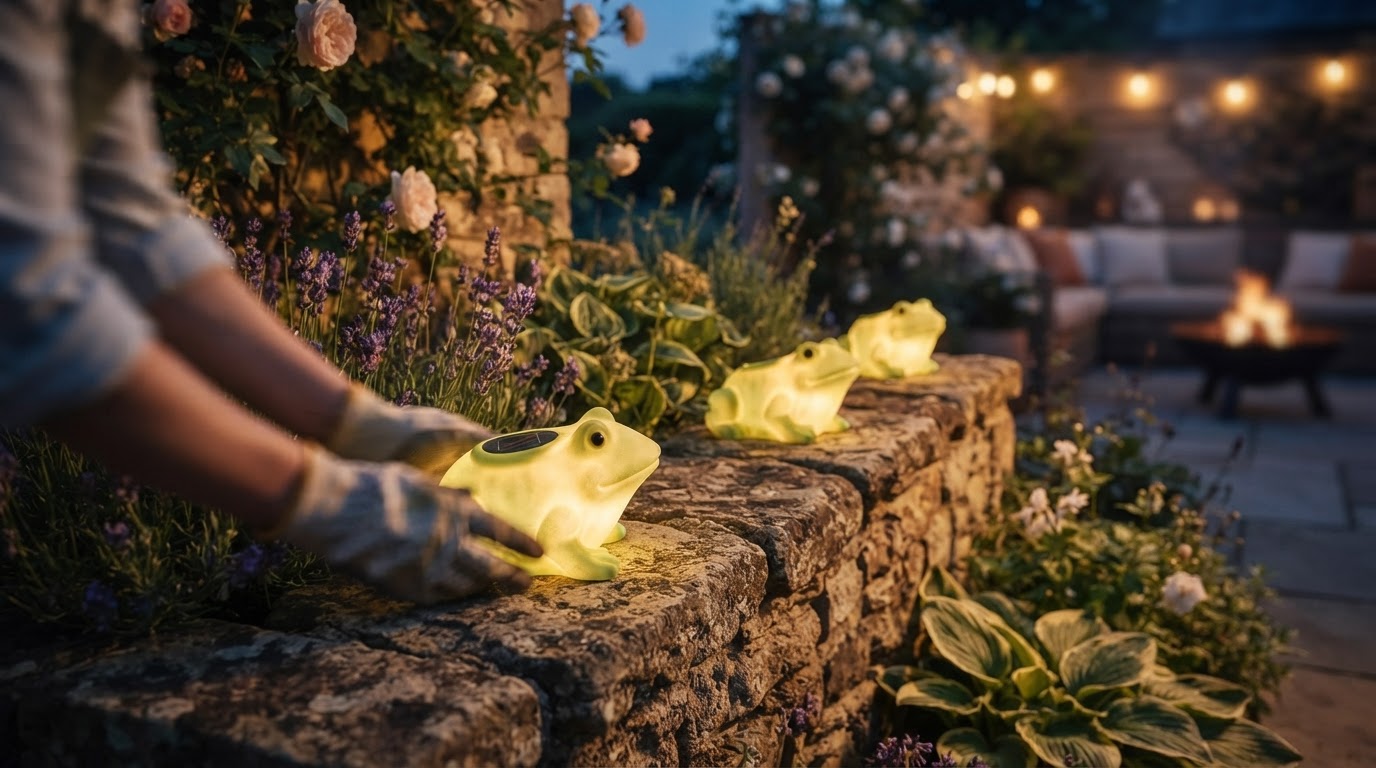
Solar Frog Lights: Evaluating Outdoor Statue Performance
 Priya RamanSenior Analyst
October 26, 2026 — The market for functional garden ornaments is shifting toward high-output resin models, with Solar Frog Lights leading the integration of accent lighting and weather-resistant sculpture. As property owners increasingly prioritize sustainable landscaping, the technical requirements for integrated photovoltaics have moved from simple novelty to essential garden utility.
Modern outdoor frog statues with solar lights must balance aesthetic volume with light-gathering efficiency. According to product specifications from At Home, the standard for these units often involves a resin construction paired with solar-powered eye lights, such as those found on their 10.5-inch sunflower frog statue. This design philosophy ensures that the statue remains a focal point during daylight hours while providing reliable orientation lighting after sunset. When selecting a unit, it is helpful to view the purchase through a specific framework: the Luminescence-Durability Matrix.
The Three-Axis Evaluation Framework
To accurately assess the value of a solar statue, two axes matter here: material integrity and photovoltaic conversion efficiency. Think of it as a matrix of aesthetic longevity versus electrical output. On the first axis, material integrity, the shift from hollow plastic to reinforced resin allows for better internal housing of the Ni-MH batteries and wiring. This prevents the common failure point of moisture ingress, which often plagues lower-end garden ornaments. On the second axis, photovoltaic efficiency, the surface area of the solar panel must be proportional to the LED draw. A high-quality statue typically utilizes a polycrystalline panel that can reach a full charge within 6 to 8 hours of direct sunlight, providing roughly 8 to 10 hours of illumination.
Evaluating these products also requires looking at the third axis: mounting stability. While solar frog stakes for yard offer high stability in soil, larger resin statues rely on a weighted base to resist wind displacement. The decision rule is straightforward: for high-traffic patio areas, choose a resin-based statue with a wide footprint; for garden beds, a stake-mounted light is preferable. Understanding how does a metal frog solar lantern hold up outdoors is also critical for those mixing materials, as metal requires different oxidation protections than resin. Furthermore, validating garden statue performance involves checking the IP rating—ideally IP44 or higher—to ensure the internal LEDs are protected against splashing water from all directions. Once you see it this way, the choice between a decorative ornament and a functional light becomes a matter of balancing these three technical axes.
Expert tip: To maximize the lifespan of your solar statue, clean the photovoltaic panel with a damp microfiber cloth monthly; even a thin layer of pollen can reduce charging efficiency by up to 30%.
Properly maintained solar statues serve as both art and utility, bridging the gap between traditional landscaping and modern energy efficiency. Selecting the right model requires a focus on both the internal circuitry and the external finish to ensure the investment lasts through multiple seasons.
Sources
- Sunflower Frog Solar Light Outdoor Garden Statue, 10.5" | At Home
- Mini Frog Statue w/ Solar Lights Decoration Review (Link ... - YouTube
- Frog Garden Statue Outdoor Figurine Lights Solar Garden Frog Ornament ...